 7688 SW Capitol Highway, Portland OR, 97219
 503 432 7450
 info@southwestportlandmartialarts.com


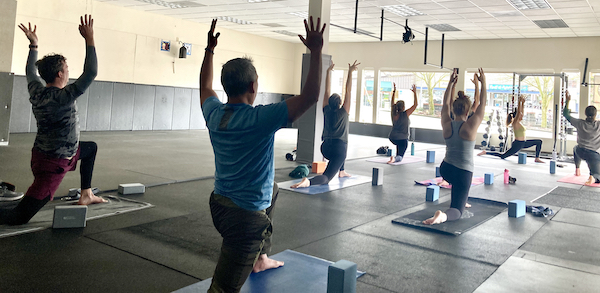
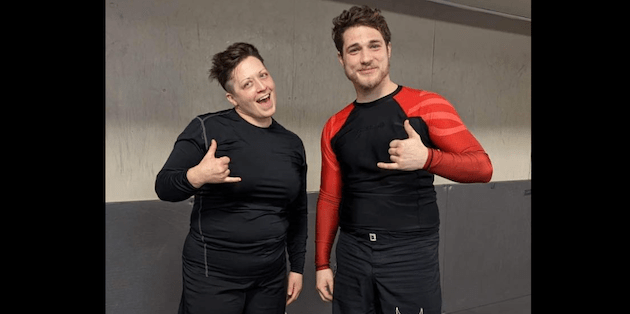

 Meet the press family. There’s shoulder press, push press, push jerk, split jerk, and squat jerk. All of them share the same finish position, the bar overhead such that if you were to draw a line starting at the middle of the foot, go through the knee, the hip, the shoulder, and then finish at the barbell, it should be straight.
Why should it be straight? So that we’re supporting the weight with good structure. If the bar is behind that line, it puts a strain on the low back, increases the risk of injury, and possibly causes the bar to crash to the ground behind us. If the bar is in front of that line, it puts a strain on the shoulders, increases the risk of injury, and possibly causes the bar to crash to the ground in front of us.
That’s why today we spent a bunch of time focusing on how to find the correct finish position. Technique is strength. Strength is skill. Work hard in the smartest way possible.
Interested in our CrossFit classes? Come try a free week. The schedule is here.
SW Portland Martial Arts Blog
The Press Family
September 12th, 2025Guard, Trap Triangle, and Triangle
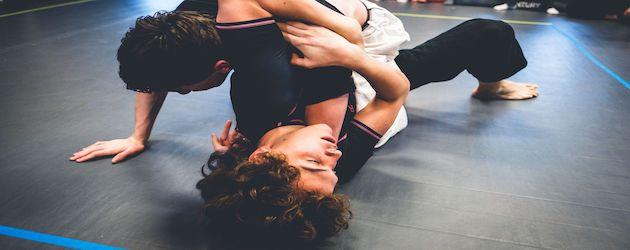
September 9th, 2025 The longer you train in BJJ, the more you should be able to see variations in the positions. As a novice, it’s all a mess of limbs. With some experience, you start to pull out the some major positions: guard, side control, mount. Tonight, Coach Alex had the class look at the difference between how to defend when you’re in a trap triangle versus how you defend when you’re in the triangle.
What’s the difference? A trap triangle means you’re close to being choked. A triangle means you are actively being choked. Most of the time, the trap triangle proceeds the triangle. Heed the warnings! Defeat the trap triangle so you don’t have to fight desperately to survive the triangle.
Even better is to know what your partner needs to do to set up the trap triangle when you’re still in guard.
Interesting in trying out classes? All students are welcome to a free week. Come on in and check it out.
Sparring in Kids Class
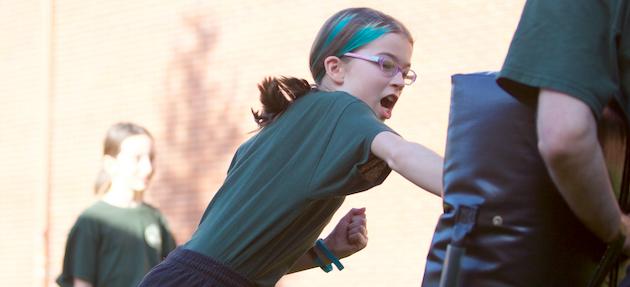
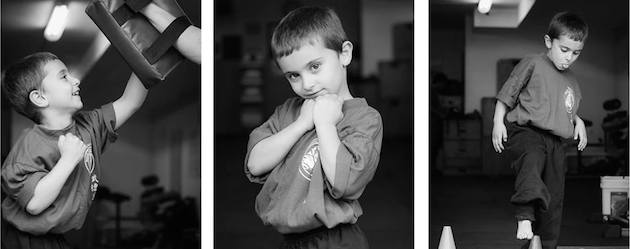
September 6th, 2025 Thursdays is our sparring class for kids. What’s that mean? It means we put on the gloves and the shin guards and we play. We don’t go hard – and that’s not just because it’s kids class. We don’t go hard in adult class either. We keep our sparring light.
What’s “light” mean? Light to us means touching the head. Light to the body means a hit that can be felt but doesn’t push the body out of alignment. Light to the legs means the same kind of thing – you feel it but it doesn’t hurt.
We believe that in order to learn functional martial arts, there needs to be contact. We also believe that hard contact, especially to the head, and especially in children, is counter productive.
It’s definitely true that the body and legs can adapt to contact – meaning if you train over time, you can get used to harder contact – but that’s only something we do in adult classes and even there we take our time, never cross anyone’s limits, and never go hard to the head.
Interested in our kids martial arts classes? Check out the schedule here.
Defense
September 2nd, 2025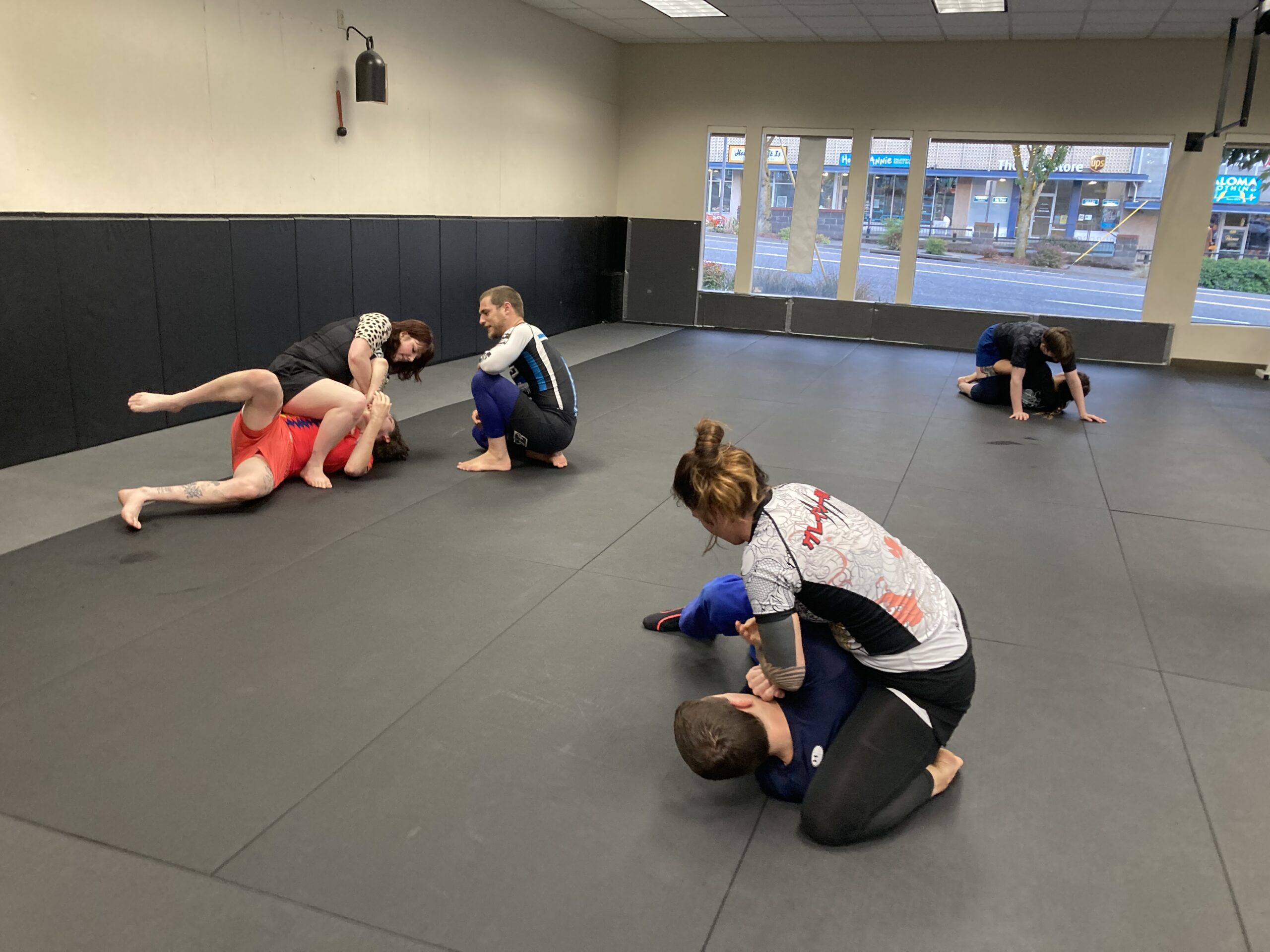 For September, the theme in our BJJ classes is “late stage defense.” What’s that mean? It means how do we get out of bad positions and submissions. It also means learning to recognize the level of threat you’re under. If you can’t identify how bad the situation you’re currently in is, it can be very tough to defend. Finally, it will mean learning how to not simply escape submission threats, but how to immediately move into a counter attack.
Practically, that will mean drilling and naming bad positions. This will require both solid offense and solid defense. In order to know how to escape an armbar, you need a partner with a decent armbar. If you’ve got a partner with a lousy armbar, you’re not going to improve your defense training with them.
If you’re interested in training BJJ with us, come try a free week. Our schedule is here. If you’ve never done any martial arts, no sweat. We love welcoming beginners into the art. Come in and we’ll work with you at your speed.
Throwing Medicine Balls
August 29th, 2025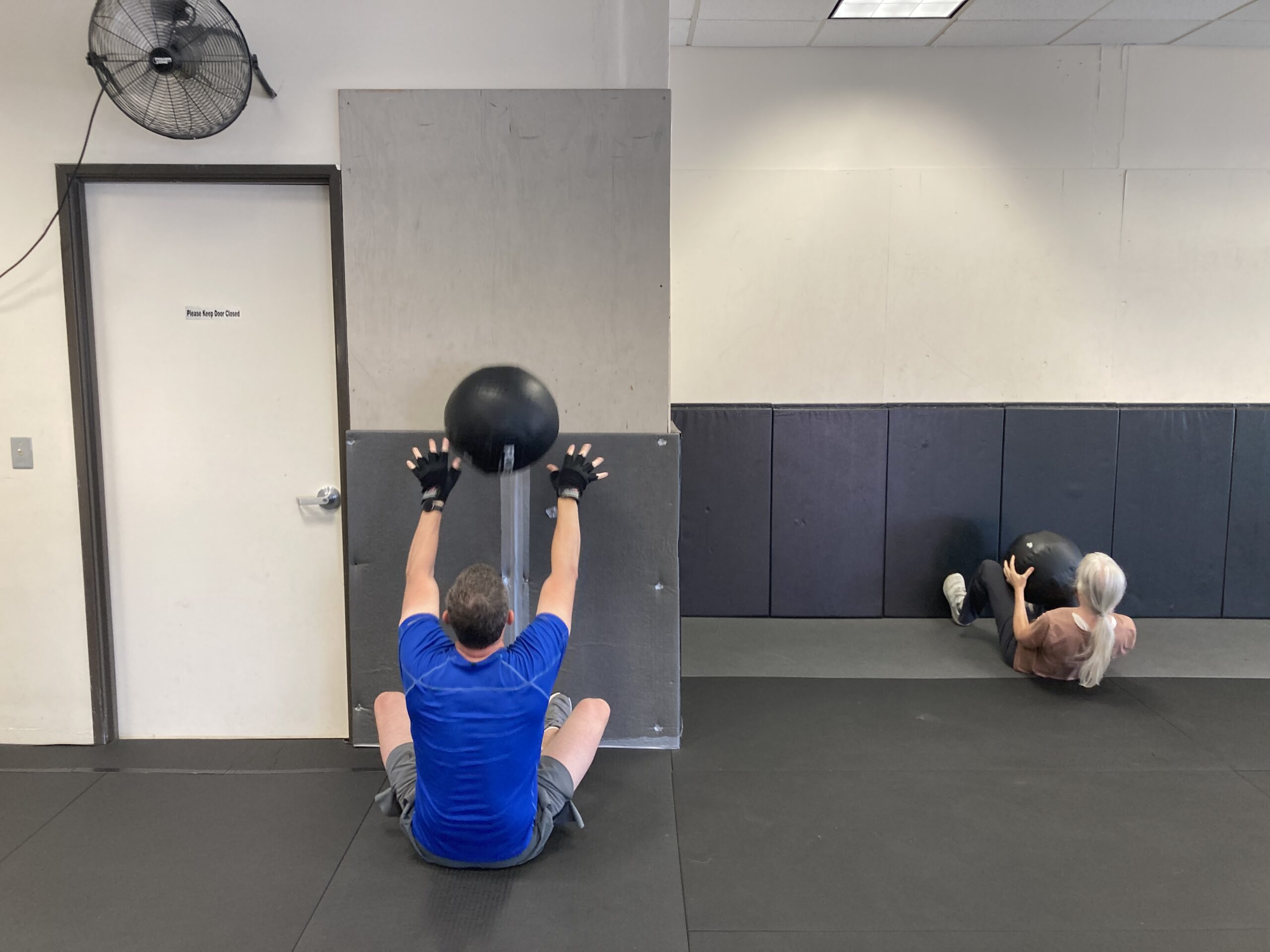 Some gyms, so I’m told, are barbell-centric. Others are HIIT centric. So which are we? We’re community centric.
Too cheesy of an answer? Too much of a dodge? Alright, fine. We use the barbells, we spend time dissecting how to properly lift. We also do HIIT and spend time practicing good technique for bodyweight movements.
Still a weak answer? I guess I’m not up to picking a side, because I find the debate to be meaningless. We’re here to learn how to move properly, with barbells and without. Today we threw medicine balls. Tomorrow we might throw barbells. Either way, we’re going to use good technique and develop quality movement patterns that are going to make us more awesome humans both inside and outside of the gym.
Interested in CrossFit? Come try a free week. It’s our standard offer for all new students. Click here for the schedule and signup for any class at no charge.