 7688 SW Capitol Highway, Portland OR, 97219
 503 432 7450
 info@southwestportlandmartialarts.com
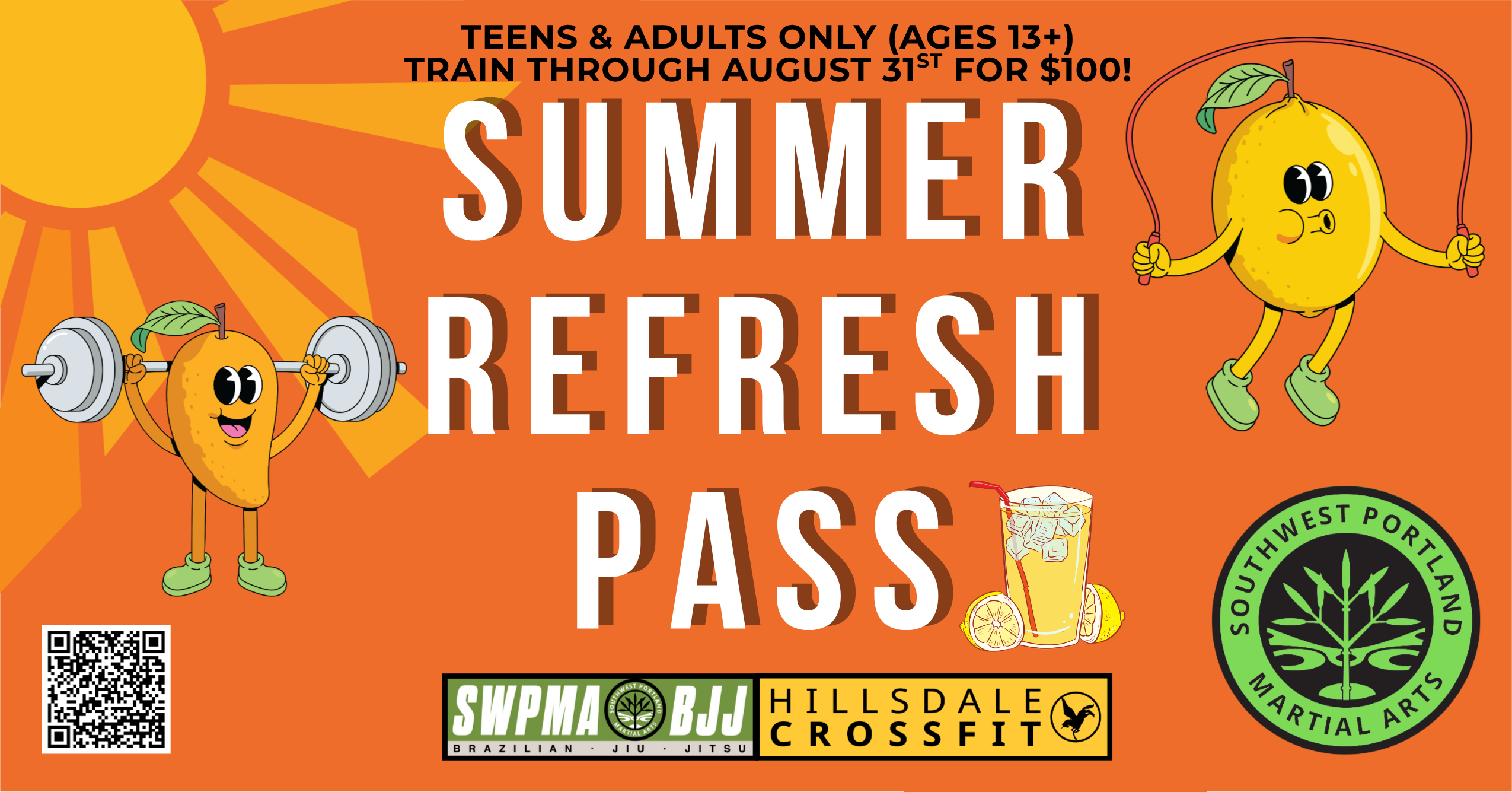 Summer is coming! Sing, cukoo, sing. The meadow is blooming, the woods are throwing out all the leaves, and it’s time to train at Southwest Portland Martial Arts.
Pretty sure that’s how that poem goes.
Anyway, terrible paraphrases aside, we’re running an amazing special. Pay us $100 and you can train from now until August 31st. You get 100% of our classes – yoga, martial arts, and CrossFit.
What’s the catch? No catch, but the offer is limited to new students only, and only to folks 13 years old and older. Sorry, no kids for this special (check back in when the next school year starts.) Go here to sign up.
Crossfit Hillsdale Blogposts
Summertime
May 25, 2026
Row
May 17, 2026
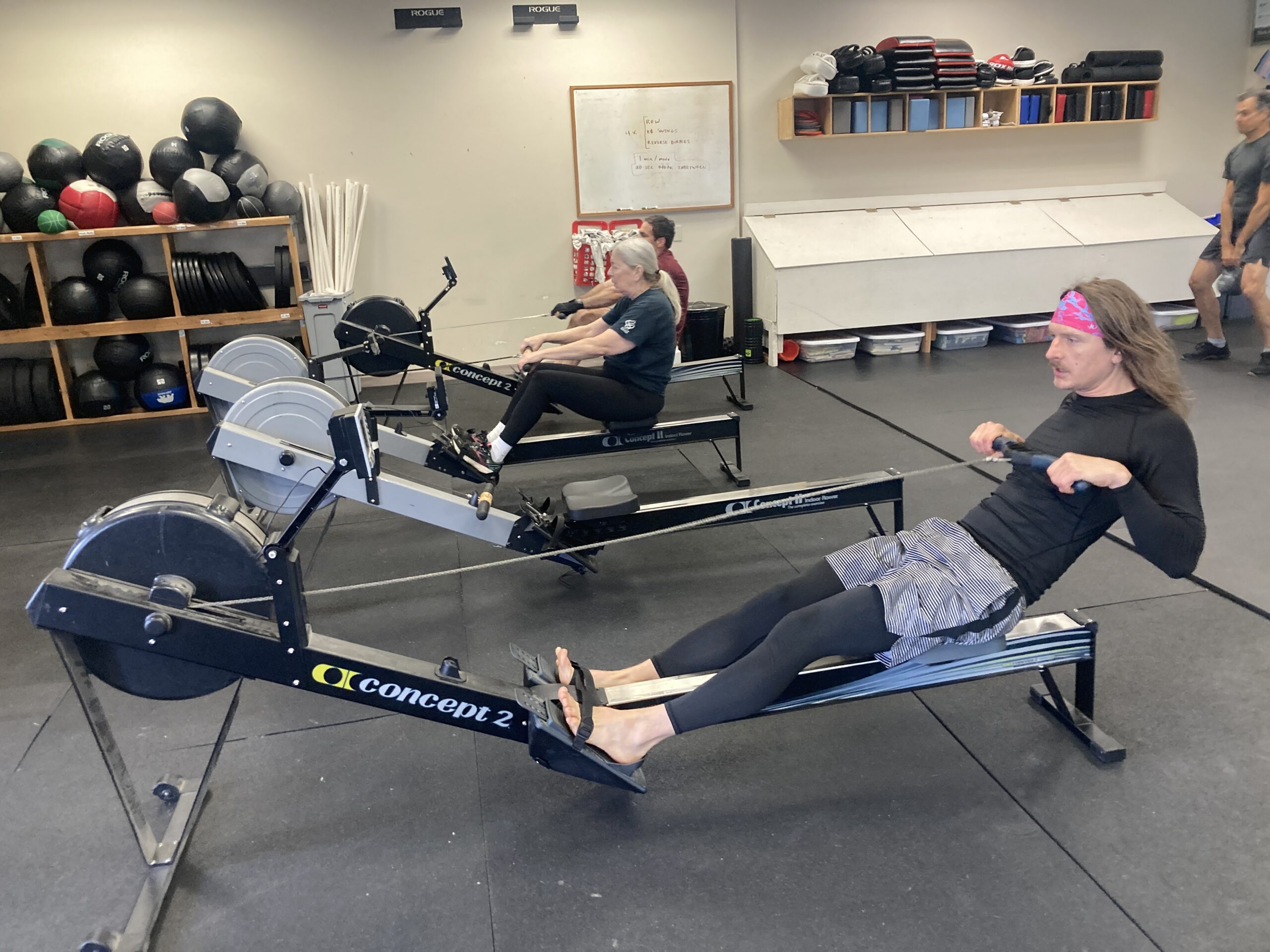 Since the rower is just a machine, there’s no technique to it, right?
Wrong. We’re going to spend the next 10 weeks working on rowing technique. That doesn’t mean we’ll do it everyday, but there will be rowing in at least one workout a week and we’ll try to use it as a warmup and talk about technique at least two times a week.
For today, we talked about the speed of the pull versus the speed of the return. As a general rule, you should pull the handle about twice as fast as you let it return. Why? Because then you can put more power into each stroke. If you don’t let the rower spin down, you can’t make it go faster.
Try it. I was shocked to see I was keeping a faster pace and getting a longer rest between pulls.
Position
April 8, 2026
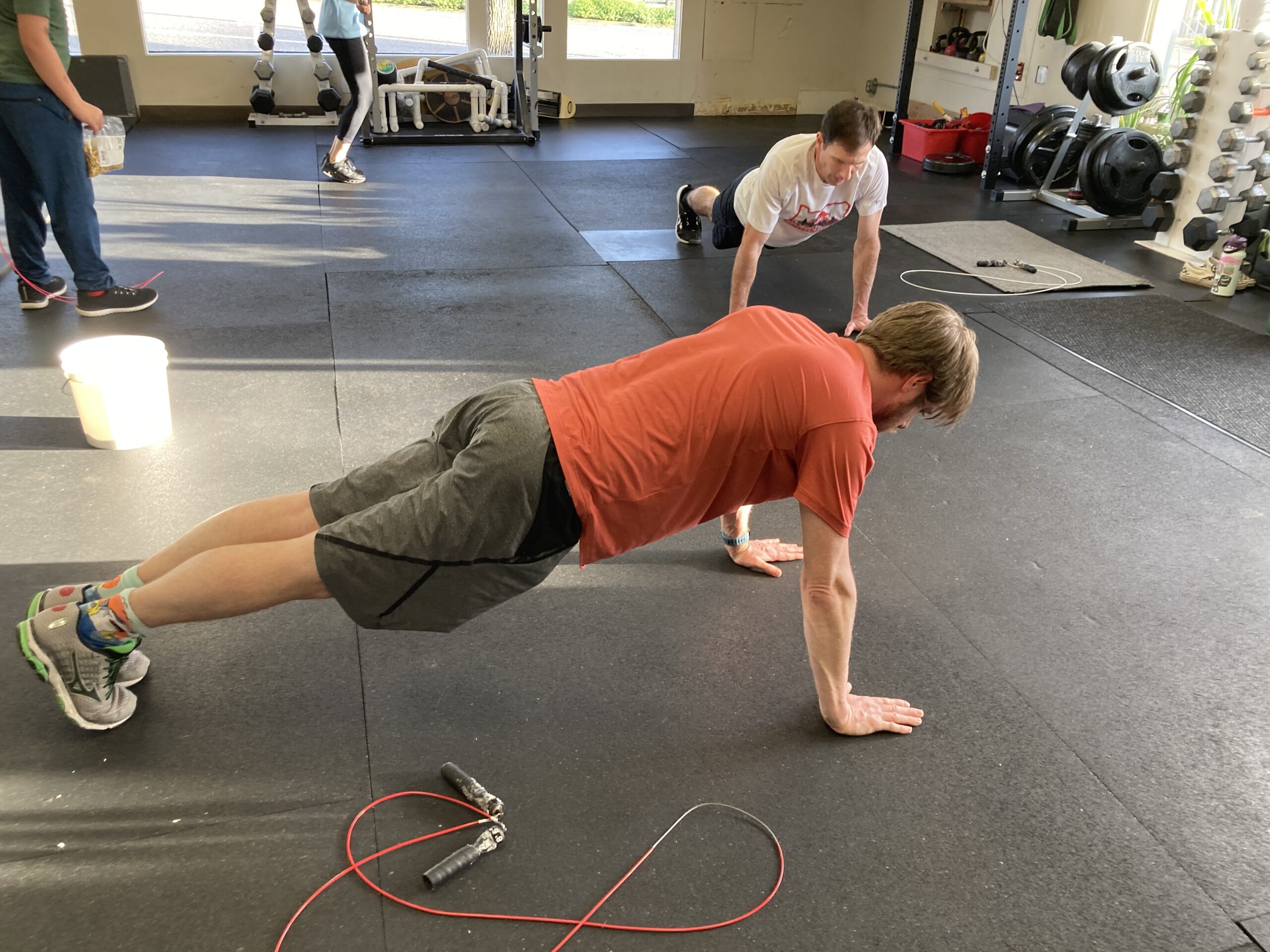 In CrossFit, we sometimes break down movements into positions. How does this work? Let’s look at the push up as an example as to why this might be useful.
First, we all get into the top of a pushup and look at the key points of the position. The head, hips, and ankles are all in a line. The elbows are locked out. The fingers can be pointed straight ahead or rotated slightly outward depending on wrist comfort.
Second, we’d all get in the bottom of a push up and repeat the process. Again, the head, hips, and ankles are all in a line. The elbows are in against the body.
Finally, after feeling and talking about what both those positions are supposed to be, we’d do a few push ups. Why? Because with this sort of approach many students will see an improvement in technique.
Like everything, it doesn’t always work and it can be overdone, but better technique equals better fitness and we’re all about that.
Interested in our CrossFit classes? Check out our schedule and try a free week.
Jump
April 2, 2026
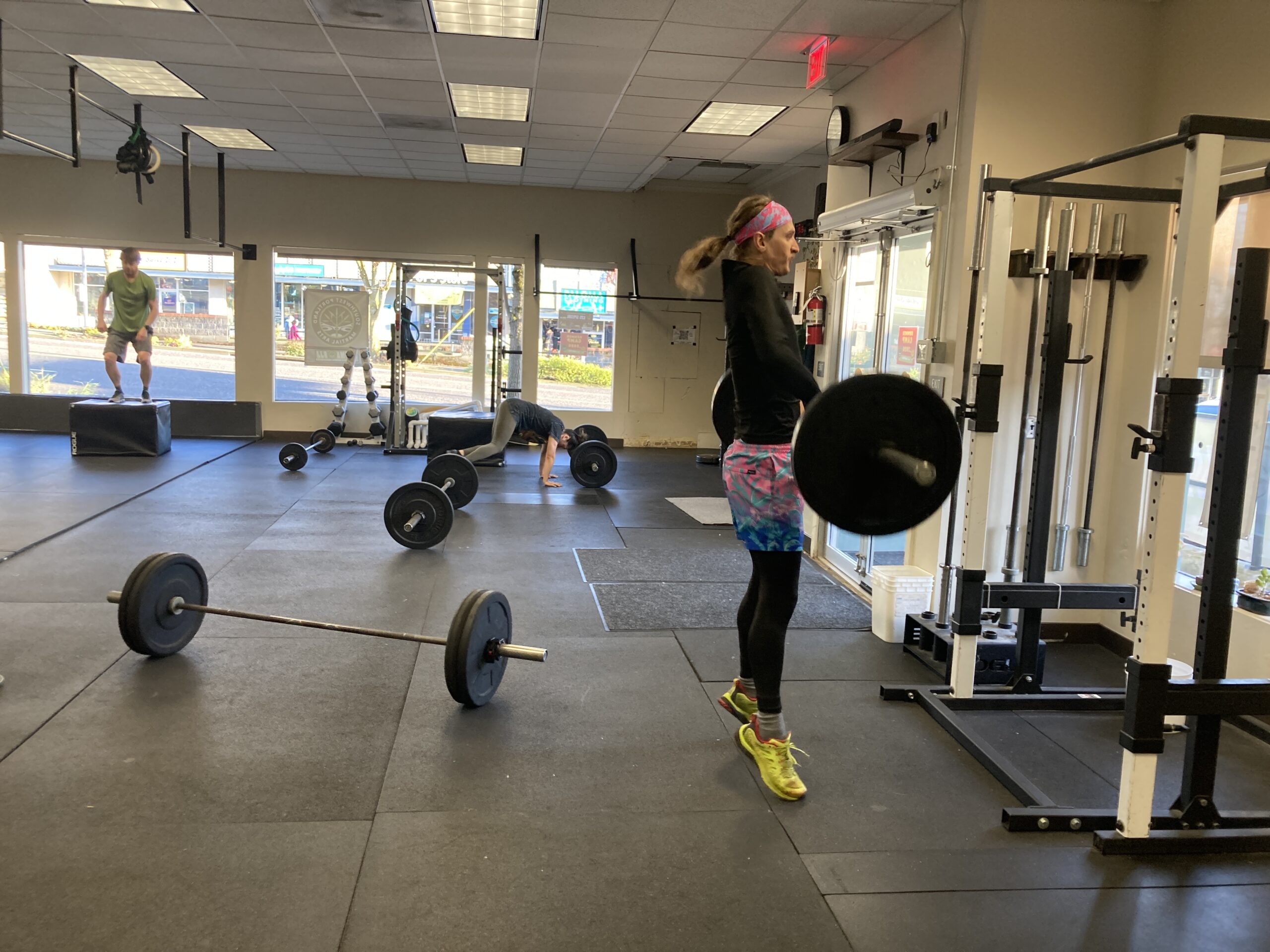 The Olympic lifts are incredibly complicated. They can be dissected into hundreds of tiny sections, drilled hundreds of different ways, and argued about for years.
Given all that, it can be useful keep things simple. Sometimes, when the lift looks flat, it can be super helpful to simply focus on jumping during the clean. Why is that useful? Because jumping, will almost always cause you to go into full extension and put all your power into moving the bar.
To be sure, this is not a failsafe method, or even the best method all the time, but if you find your lift is slow and your brain is overloaded, focus on jumping, then have the coach give you some refinement from there.
Interested in our CrossFit classes? Come on in and try a free week. Here’s a link to our schedule.
The Press Family
September 12, 2025
 Meet the press family. There’s shoulder press, push press, push jerk, split jerk, and squat jerk. All of them share the same finish position, the bar overhead such that if you were to draw a line starting at the middle of the foot, go through the knee, the hip, the shoulder, and then finish at the barbell, it should be straight.
Why should it be straight? So that we’re supporting the weight with good structure. If the bar is behind that line, it puts a strain on the low back, increases the risk of injury, and possibly causes the bar to crash to the ground behind us. If the bar is in front of that line, it puts a strain on the shoulders, increases the risk of injury, and possibly causes the bar to crash to the ground in front of us.
That’s why today we spent a bunch of time focusing on how to find the correct finish position. Technique is strength. Strength is skill. Work hard in the smartest way possible.
Interested in our CrossFit classes? Come try a free week. The schedule is here.